Can Stress Make You Faint? What the ER Taught Me About My Paycheck
Not medical advice. This is a personal story, not a diagnosis of you. If you are having symptoms, especially chest pain, a racing or irregular heartbeat, dizziness, or fainting, see a doctor today. Last updated: October 2026.
The ceiling comes back into focus first.
I am sitting in a chair in my own kitchen and the room will not hold still. It spins, sharpens, blurs again, and my stomach turns over with it. Then the confusion: how did my wife cross the room to her knees in front of me? Her face is too close and too scared. “Jack. Jaaack. JACK, can you hear me?”
I didn’t know it in that chair, but I was about to spend a night answering a question I had never once thought to ask: can stress make you faint? Stress fainting was real, it turned out, and it was the smallest thing the night would teach me.
It was just after nine on a Friday. My daughter and I had finished our daddy-daughter date night, and nothing dramatic had happened, just the tail end of another stressful week, the kind I had stopped noticing because every week was that week. I was about to learn what mine had been quietly costing me long before it put me on the floor.
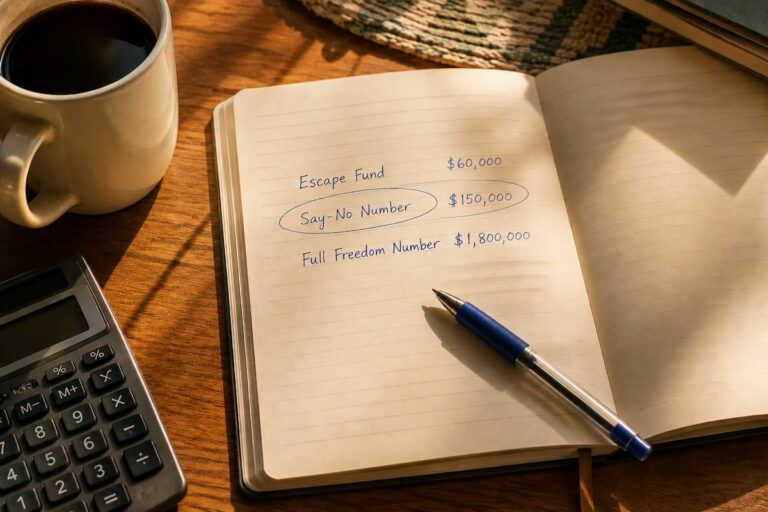
The way out starts with one number. The free worksheet gets you there in 10 minutes.
Getting To The ER
It took my wife half an hour to talk me into going. Not because I felt fine, I didn’t, but because going meant admitting it was real. She had watched me pass out. She had watched what looked like my heart nearly stop for more than a minute before I came back not knowing where I was or who she was. Saying yes to the ER meant saying yes to the size of the thing, and calling her parents close to ten at night felt like confessing it out loud.
They were in the car before I finished apologizing for the trouble. Minutes later they were at the door in the dark, quiet, fast, low voices. The whole careful operation had one purpose: the kids were asleep upstairs, and every adult in that house was arranging themselves so the kids would never see it. That is the part I keep coming back to. The people the job’s cost would be charged to were asleep down the hall, and all of us were working to keep it that way.
The Waiting Room, And The Thought At 2 a.m.
The first minutes were triage, making sure I had not had a heart attack. I hadn’t. After that it was every ER at two in the morning: waiting. The fluorescent light that never flatters anyone. Bloodwork, a monitor beeping somewhere, a paper bracelet, more waiting. Nobody warns you that boredom sits down right next to fear, that you can be terrified and bored in the same plastic chair.
And in that chair the thought arrived that wouldn’t leave. I had done everything right. Years earlier, a different scare had taught me what my heart could do under load, and I had left that company because of it. Different employer now. Better title. More money. From the outside, the story was working out.
And my body had just filed the exact same review.
The first episode taught me what my heart could do. This one, years and a whole career move later, taught me something worse: I had changed the logo on my badge and nothing else. Same hours, same pressure, same trade, new building. Then a nurse called a name, and I was back in a room.
What I Learned About Stress Fainting
Here is where I want to be careful, because this doesn’t end with a clean diagnosis. They ran the tests and ruled out the emergency that brings most people in. Then they told me what they could: that it was syncope, the clinical word for fainting, and that it was most likely stress related. What they could not give me was anything more definitive, because it had happened in my kitchen, not in front of them and with no monitor running when my body gave out. I went home with a likely cause, not a certain one, and without the clean, single-word answer I had been hoping for.
What I did not get was permission to keep going the way I had been. A body does not pass out on a Friday night for no reason, and “likely stress related” is not the same as “this is fine.” The general truth about stress fainting is simple enough: stress is a real trigger, and a first episode is exactly the kind of thing a doctor needs to look at, because some of the causes are serious. I left with instructions, a follow-up, and the first honest understanding that the thing doing this to me was not a mystery. It was the job.
The Ledger Entry
The night cost me in two currencies.
The first was dollars, and the bill came weeks later. An ER visit like mine commonly bills in the low thousands before insurance, and even well covered you can owe anywhere from a few hundred to a few thousand out of pocket, depending on your deductible and copay. But here is the figure that reframes all of it. In 2026, the most an ACA-compliant health plan can make you pay out of pocket in a single year is $10,600 for an individual and $21,200 for a family.
Even fully insured, one bad health year can take ten thousand dollars straight off your runway. And if you are on COBRA when it happens, you are paying the full premium on top of that. Which is the trap in a single line: the job producing the visits and the coverage paying for them are the same employer.
The second currency does not show up on any statement.
The job’s cut gets charged to people who never signed the offer letter.
My wife’s night. My in-laws’ night. The version of it my kids came within a staircase of seeing. None of them chose the workload or the travel or the pressure that put me on that floor. All of them paid for it anyway.
The Argument The ER Made
A paycheck is an exchange rate: hours and health for money, at a price almost none of us ever sees written down, so we keep trading at terms we would refuse if they were said out loud. That night the itemized hospital statement said it out loud, the first honest accounting of a deal I had been signing for years. It is the same math as your real hourly wage, except the hospital does the arithmetic and mails it to your house.
The Turn, Honest And Not Heroic
Here is where a worse writer would tell you I walked in the next morning and quit. I didn’t.
I wanted to. I didn’t have it in me to resign and give up my family’s main income on principle, so I didn’t. What I did instead was slower and duller than a resignation, and it has lasted longer. I started looking for a way out, yes, but more importantly I stopped waiting to be rescued from the job and started building the one thing that makes leaving possible: a number. Runway. The beginning of walk-away money, and eventually a real freedom number. Not the exit itself. The thing that earns you the exit.
Because that is the part nobody tells you. The fund is not the alternative to leaving. It’s what makes leaving mean something. People who storm out on principle with nothing saved tend to come back within months on worse terms. People with a year of runway get to actually mean it when they say no.
If I could tell the man waking up in that kitchen one thing, it would be this: no one is coming to save you. If you want a way out, it has to come from you, and it starts with buying yourself the freedom to walk away.
Your One Thing Tonight
Two things tonight, both about ten minutes and both a little uncomfortable, which is how you know they matter.
First, write down your four numbers and date them: resting heart rate, blood pressure, sleep, and your real weekly hours. That is the same health check-in from the heart piece, and dating it is what keeps a slow decline from hiding.
Second, find out what one ER visit would actually cost you. Look up your plan’s ER copay, your remaining deductible, and your out-of-pocket maximum. Then look up what that same visit would cost on COBRA, with no employer paying part of the premium. Most people have never checked. The number changes how you look at the job that is producing the visits.
Frequently Asked Questions
Can stress cause fainting?
Yes. Fainting brought on by sudden fear, acute emotional stress, or anxiety is often vasovagal syncope: the trigger causes your heart rate and blood pressure to drop quickly, which briefly reduces blood flow to the brain and causes a short loss of consciousness. According to Mayo Clinic, it’s usually harmless on its own, but you can be injured when you fall, and because some causes of fainting are cardiac, a first fainting episode should always be evaluated by a doctor rather than written off as stress.
What are the physical symptoms of work stress?
Commonly reported signs include disrupted sleep, heart palpitations, chest tightness, headaches, digestive trouble, appetite changes, getting sick more often, and fatigue that rest does not fix. Symptoms vary from person to person. Any cardiac symptom, meaning chest pain, a racing or irregular heartbeat, dizziness, or fainting, should be checked by a medical professional rather than brushed off as stress on your own.
No One Is Coming To Save You
I built Off The Treadmill hoping it would spare someone else the night I just described. Everything on this site up to here has been about the layoff and the money. Everything after it is about the body’s side of the ledger: what the grind costs you physically, and how to protect yourself while you build the way out. You don’t have to quit tomorrow. You do have to be honest that no one is coming to save you. That is where it starts, and it is what I write about every week. Join the list below.
Last updated: October 2026. This is a personal story and general information, not medical or financial advice. Fainting and cardiac symptoms can signal serious conditions and should be evaluated by a doctor, especially a first episode. For your own health or money decisions, talk with a qualified professional.